What a Zone Control System Does for Your Home
A single thermostat controlling an entire house forces every room to share one temperature setting, even though the upstairs bedrooms trap heat while the finished basement stays cold and the sunroom bakes in the afternoon. A zone control system solves that imbalance by dividing your home into separate areas, each with its own thermostat and its own control over how much conditioned air it receives. Instead of overheating the whole house to warm one chilly room, the system directs airflow exactly where it is needed.
At Sound Heating and Air Conditioning Inc, we design and install zone control systems throughout the Greater Puget Sound area, including Elk Plain, Frederickson, Graham, Midland, Parkland, Puyallup, South Hill, Spanaway, and Summit. The result is a home that feels consistent from room to room, without the hot and cold spots that come from trying to condition an entire structure with one central setting. This approach also reduces the workload on your furnace, heat pump, or air conditioner, because the equipment no longer runs longer than necessary to satisfy a single distant thermostat.
The Core Components That Make Zoning Work
A zone control system relies on several parts working together as one coordinated unit. Understanding how these pieces fit helps explain why a properly engineered system performs so much better than a patchwork of space heaters or manually adjusted vents. Each component has a specific job, and the quality of installation determines how smoothly they operate over the years.
The heart of the system is the zone control panel, which acts as the brain that reads signals from each thermostat and decides which dampers open and close. The following parts make the whole system function together:
- Motorized dampers: These metal plates install inside your ductwork and pivot open or closed to direct air toward the zones calling for heating or cooling.
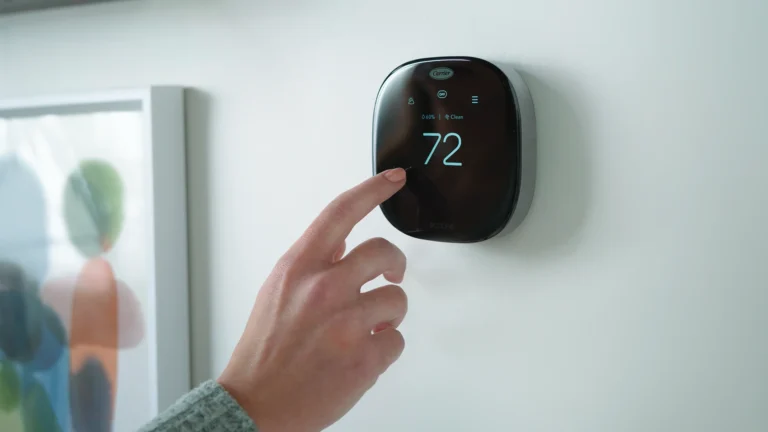
- Individual zone thermostats: Each zone gets its own thermostat, letting family members set comfortable temperatures in bedrooms, living spaces, and offices independently.
- The central control panel: This unit interprets thermostat demands, opens the correct dampers, and signals the HVAC equipment to start or stop.
- Bypass or modulating controls: These manage air pressure when only one or two zones are open, protecting the equipment from strain.
- Compatible HVAC equipment: A furnace, heat pump, or air handler that can respond to variable demand ties the entire system together.
How We Plan and Install a Zone Control System
Zoning is not a product you simply bolt onto existing ductwork and hope for the best. It begins with a careful evaluation of your home, because the number and placement of zones depends on how your house is built, how it is used, and where comfort problems already exist. When our comfort specialists visit, we look at the layout, the direction the home faces, insulation levels, window placement, and the paths your existing ducts already follow.
From there, we map out logical zones. A two-story home often benefits from separating the upper and lower floors, since heat naturally rises and leaves upstairs rooms warmer in summer and downstairs rooms cooler in winter. Homes with additions, bonus rooms over garages, or large open great rooms frequently need their own dedicated zones because those spaces behave very differently from the rest of the house. Rooms that are rarely used, such as guest bedrooms, can be set to conserve energy when empty.
Once the zoning plan is confirmed, we install the motorized dampers at the right points in the duct system, mount the control panel, run the low-voltage wiring, and place each thermostat where it will read the true temperature of its zone. We then calibrate the system, verify airflow in every zone, and confirm that the equipment cycles correctly under different combinations of demand. Because Sound Heating and Air Conditioning Inc has installed complete heating systems since 1989, we understand how to balance airflow and static pressure so your equipment runs efficiently rather than fighting against closed dampers.
Technical Specifications That Determine Performance
The success of a zone control system depends on managing air pressure and airflow within safe limits. When several dampers close at once, the air the blower moves has fewer paths to travel, which raises static pressure inside the ducts. If that pressure climbs too high, it causes noise at the registers, strains the blower motor, and can shorten equipment life. This is why proper design includes either a bypass damper that relieves excess pressure or, in more advanced setups, variable-speed equipment that slows the blower to match the number of open zones.
Modern zone systems pair especially well with variable-speed and two-stage HVAC equipment. A variable-speed blower can ramp its output up or down in fine increments, delivering exactly the volume of air a small zone needs without overwhelming it. Two-stage and modulating furnaces and heat pumps produce partial heating or cooling output, so a system serving just one bedroom does not blast full capacity into a small space. These technologies let zoning operate quietly and efficiently, and they represent the kind of energy-efficient equipment we favor when designing systems for our customers.
Thermostat compatibility also matters. Communicating thermostats that talk directly to the control panel and equipment provide the smoothest performance, while programmable and smart thermostats add scheduling and remote control from a phone. During installation, we confirm that every thermostat, damper, and the control panel share the same communication protocol so the entire system responds as intended.
Where Zone Control Delivers the Biggest Benefit
Certain homes and buildings gain far more from zoning than others, and recognizing these situations helps you decide whether the investment fits your needs. Multi-level homes are among the clearest candidates, because temperature stratification between floors is nearly impossible to fix with a single thermostat. Families who keep bedrooms cooler at night while wanting warm living areas in the evening also see immediate improvement, since each zone follows its own schedule.
Homes with large windows or rooms facing direct afternoon sun benefit because those spaces heat up while the rest of the house stays comfortable, and zoning lets you cool only the affected area. Additions and converted spaces, such as attics turned into offices or garages finished into living quarters, often struggle to reach comfortable temperatures because they were added after the original duct design. A dedicated zone brings those spaces in line with the rest of the home. On the commercial side, zoning allows different sections of a building to be conditioned according to occupancy and use, which reduces waste in areas that sit empty during parts of the day.
Energy savings follow naturally from this precision. By conditioning only occupied areas and avoiding the constant overshoot that plagues single-thermostat homes, a well-designed zone system lets your equipment run shorter, smarter cycles. Over a full heating and cooling season in the damp, variable Northwest climate, that reduction in runtime adds up while comfort actually improves.
Why Work With Sound Heating and Air Conditioning Inc
Since our founder Curtis Hood started the company in 1989, we have grown from one man with a mission into a team of about 40 professionals who install, service, and maintain nearly every type of heating and cooling system on the market. That breadth of experience matters with zoning, because a system that is not carefully matched to your ductwork and equipment can create as many problems as it solves. We bring more than 36 years of hands-on knowledge to every design, and our retro-fit and change-out specialists work directly with you to plan a system that fits your home and how you live in it.
We back our zone control work with the same standards we apply to every project: prompt response, excellent products, and superior service. If a zoning issue ever comes up outside normal hours, our 24-hour on-call service department stands ready to help. As Puyallup and Tacoma’s favorite HVAC and electrical company, we are proud to bring balanced, efficient comfort to homes and businesses across Elk Plain, Frederickson, Graham, Midland, Parkland, Puyallup, South Hill, Spanaway, and Summit. Contact Sound Heating and Air Conditioning Inc to discuss how a zone control system can eliminate the hot and cold spots in your home and put comfort exactly where you want it.